Creativity
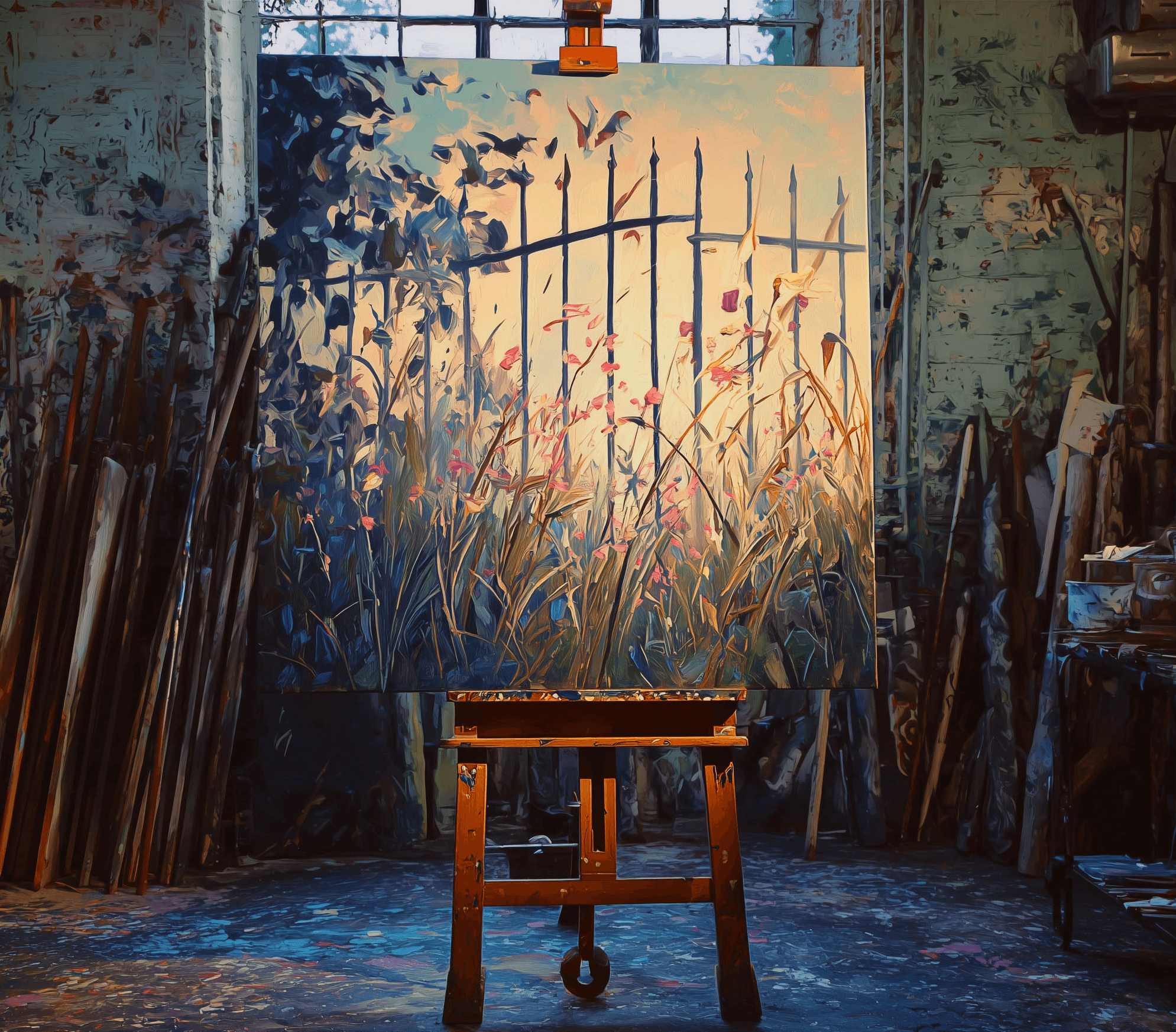
The Painting I Couldn't Recreate
When I was 24, a gallery in Florida called with a commission I should have taken. I said no. I've been thinking about why ever since.
I was invited to appear on the Higher Ed Icons podcast recently with Mallory Willsea and Voltaire Santos Miran. One of the questions they asked me was how I've kept the work fresh across twenty-five years in an industry that gravitates toward sameness. How I've built teams that don't settle for the conventional answer. How I keep choosing the harder path when the easier one is sitting right there.
The answer started with a story I haven't told publicly in a long time. A phone call from a gallery in Florida when I was 24.
I was a young art school graduate, living in a warehouse in Cleveland, Ohio, making ends meet by working as a valet at a restaurant and doing odd jobs. I was painting every free moment I had. I had a gallery showing some of my work down in Florida, run by my roommate's aunt. I'd roll up the canvases, stick them in PVC tubes, duct tape the ends, and ship them down - where they would re-stretch them. Every now and then, she'd sell one. That could end up being three months of living expenses for me.
One day, she called. She'd sold a big painting of mine the month before. She told me a woman had come into the gallery who had fallen in love with that painting, and upon learning it had sold, wanted to know if I would create another one, very similar to it.
I should have said yes. God knows, I needed the money. I was broke. The math wasn't complicated.
But instead, I said no.
It wasn't that I was taking a stand on principle. It felt more like fear, but the kind of fear that was actually an important signal.
I knew, without having the words for it, that if I said yes, I was changing lanes. I was moving from artist to craftsperson. From exploration to production. From "I don't know what I'm going to make next" to "I know exactly what I'm going to make, because I already made it."
I told the gallery I couldn't commit to something prescribed. But if she came in and saw something new of mine that she liked, I'd love that. She did. She bought a different painting months later.
This isn’t a story about artistic purity or saying no to money to keep your soul clean. It’s a story about what creative growth makes possible. The thing she actually wanted was the work itself, not a replica of one finished moment. Recreating the painting she’d loved wasn’t going to teach me anything new. And it wasn’t going to have the life that exists only when a painting is being discovered, not manufactured. It would have been a picture of the original feeling, not the feeling itself.
The phone call every working creative gets
Every creative who works for a living gets a version of that call from Florida. The client loved the last thing. Do it again. The strategy landed. Replicate it. The template worked. Apply it. The hero drone video, the three profiles, the program finder, the news rail, the fat footer. Homepage Bingo, as Voltaire describes it.
Sometimes the right answer is yes. Craft is not a dirty word. Some of the best work in any field is the result of doing a thing a hundred times until you know it in your hands. Repetition has its place.
The problem is when repetition is the whole job. When you stop wondering what's over the next mountain. When the muscle that makes great work possible goes soft and you don't even notice. Dead work is toxic. It can spread through a team, a brand, a whole industry.
Why creative practice has to be fostered
If you employ creative people and expect them to be creative for work, you have to make room for them to be creative outside of it, too.
I've always encouraged my teams to pursue non-client work and creative ideas as part of their "jobs," ensuring there were fertile spaces for them to immerse themselves during downtime or breaks. When I was leading Fastspot (the agency I co-founded and ran from 2001-2020), we created a website feedback and commenting browser plugin called Denote. An iPad word game called Jambalaya, created and launched when the iPad and app store were just coming to market (no longer available). A CMS that started as a single client request in 2004 and kept iterating until it became the open source platform BigTree (still in use today by enterprise and higher ed sites).
We recently encouraged the team at adeo to pursue creative exploration, focusing on how micro-trends are influencing Gen Z. We host weekly meetings where we share interesting things we've seen or been inspired by. We critique the work together; the more diverse the perspectives, the better. None of those projects had a client behind them. Some of them turned into something. Some of them didn't. They all did the actual work: keeping the team's muscles warm and growing.
Today, I look for curiosity as much as I do for experience. Someone who champions asking "Why?" instead of saying "because that's just how it's done."
Two things have to be true at once if you're a creative who gets paid by clients. You have to produce great work for them. And you have to keep alive the part of you that makes great work possible in the first place. Skip either one, and the whole thing collapses.
What a creative agency partner is actually for
An internal team often structurally cannot say no to that phone call from Florida. The politics, the legacy thinking, the trustees, the budget cycle, the "but what will the alumni think." Everything inside the organization pulls toward the safest answer. The templated solution. The brand that looks like every other brand in the category.
A creative partner is someone who has lived through their own version of the call from Florida. They've felt the visceral no. They've turned down the easy money. They know the difference between repetition and exploration in their body, because they've made the choice themselves. That practice is what lets them hold the line for you. Not what's safe. Not what's familiar. Not what mirrors the competitor down the road. What is actually true for who you are.
The job of a creative partner is not to translate what you already think into a deliverable. It is to make sure someone in the room has the practice to refuse the brief when it's wrong, and to keep pushing toward what's true even when the easier path is right there.
You bring people in not to do what you ask, but to go somewhere with you and come back with something neither of you could have made alone.
That's the deal we make with the people who hire us. We are not here to give you the thing you already saw. We are here to make the next one with you. And make it better.
You can watch the original podcast episode here:


